
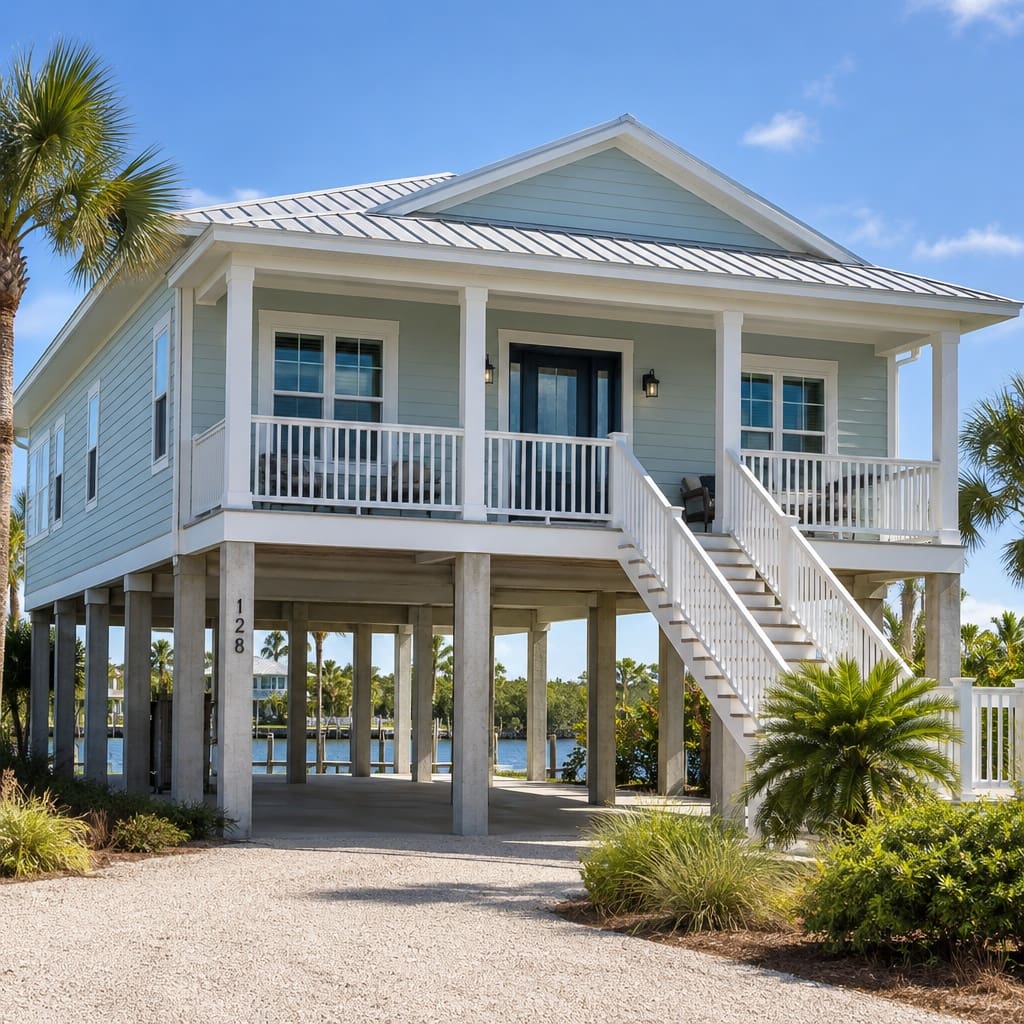
Understanding Increased Cost of Compliance (ICC) Coverage in Your Flood Insurance Policy
If your home suffers significant flood damage, the cost of rebuilding can go well beyond replacing drywall, flooring, cabinets, and other damaged materials. Depending on the extent of the damage, your local building department may require you to elevate the home or make other improvements to comply with current floodplain regulations.
This is particularly relevant for older properties throughout Pinellas County, including St. Petersburg, Treasure Island, Madeira Beach, and St. Pete Beach.
One coverage many homeowners aren’t familiar with is Increased Cost of Compliance (ICC), which is included in most National Flood Insurance Program (NFIP) policies. It can provide up to $30,000 to help pay for certain improvements required after qualifying flood damage.
However, ICC coverage has specific eligibility requirements, limitations, and deadlines. It’s also different from Ordinance or Law coverage found in homeowners and commercial property insurance policies.
Below we’ll explain how ICC works, what it covers, how FEMA’s 50% rule comes into play, and what homeowners need to know before beginning repairs.
What Is Increased Cost of Compliance (ICC) Coverage?
Increased Cost of Compliance coverage is included in most standard NFIP flood insurance policies. It helps pay for certain improvements when a building has been substantially or repetitively damaged by flooding and must be brought into compliance with local floodplain regulations.
For example, if your home suffers significant flood damage and the local building department requires you to elevate it before repairs can move forward, ICC may help pay for some of those additional expenses.
ICC is separate from your regular flood damage claim. While your building coverage pays for covered physical damage, ICC helps pay for specific improvements intended to reduce the risk of future flooding.
What Does ICC Coverage Pay For?
ICC coverage can provide up to $30,000 toward four types of mitigation work:
- Elevation: Raising a building to meet current flood elevation requirements. This may include lifting the structure, modifying the foundation, and making necessary adjustments to utilities.
- Demolition: Tearing down and removing a flood-damaged building when required under applicable floodplain regulations.
- Relocation: Moving an existing building to another location to reduce its exposure to flooding.
- Floodproofing: Making an eligible building resistant to floodwater through approved construction methods. This generally applies to nonresidential buildings.
ICC does not pay for ordinary repairs such as replacing drywall, flooring, cabinets, windows, doors, or other damaged materials. Those expenses would fall under your regular flood insurance claim, subject to the policy’s coverage and limitations.
How Much ICC Coverage Is Available?
Under the NFIP, ICC coverage provides up to $30,000 toward eligible mitigation expenses. However, that doesn’t mean every homeowner will receive the full $30,000.
One important limitation is that the combined payment for building damage and ICC cannot exceed the applicable NFIP building coverage limit. For most one- to four-family residential properties, the maximum NFIP building coverage is $250,000.
For example, consider a homeowner whose dwelling would cost $600,000 to rebuild. The maximum NFIP building limit available for that home is generally $250,000, unless separate excess flood coverage is purchased. If the homeowner receives $230,000 for covered building damage, no more than $20,000 would remain available for an eligible ICC payment under that NFIP limit.
If the building damage claim exhausts the $250,000 building coverage limit, no additional ICC payment would be available under that limit. ICC isn’t automatically another $30,000 on top of the maximum NFIP building limit.
How Does FEMA’s 50% Rule Relate to ICC Coverage?
One of the biggest questions homeowners have after a flood is whether they’ll be required to elevate their home or bring it into compliance with current floodplain regulations.
The 50% rule and ICC coverage are two different things. The 50% rule is a floodplain management requirement. ICC is an insurance coverage that may help pay for certain improvements when qualifying flood damage triggers compliance requirements.
What Is the 50% Rule?
Under FEMA’s floodplain management requirements, a building is considered substantially damaged when the estimated cost to repair it to its pre-damage condition equals or exceeds 50% of the building’s market value before the damage occurred.
The calculation is based on the value of the building itself, not the land. This is particularly relevant for waterfront properties in Florida, where the land can be worth significantly more than the home.
If a building is determined to be substantially damaged, the property owner may be required to bring it into compliance with current floodplain regulations. Depending on the property, this could mean elevating the structure, demolishing it, or pursuing another approved option.
How Is the 50% Rule Calculated?
The local building department determines the building’s pre-damage market value, which may be based on county property appraiser records or an appraisal from a licensed appraiser. That value is compared to the estimated cost of restoring the building to its pre-damage condition.
For example, consider a home with the following values:
- Building market value: $300,000
- 50% threshold: $150,000
- Estimated repair costs: $165,000
- Damage percentage: 55%
Because the estimated repairs equal 55% of the building’s value, the home exceeds the 50% threshold and would generally be considered substantially damaged.
The calculation uses estimated repair costs, not the amount paid by an insurance company. A homeowner could receive an insurance settlement below the threshold and still have a property classified as substantially damaged.
The local building department, not the insurance adjuster, makes the official determination. Local requirements can vary, so homeowners should confirm the applicable rules before beginning repairs.
Does the 50% Rule Also Apply to Renovations?
Yes, although there is an important distinction between substantial damage and substantial improvement.
Substantial damage involves the cost of restoring a building after damage from a flood, hurricane, fire, or another event. Substantial improvement generally involves renovations, additions, or other improvements when the cost of the work equals or exceeds 50% of the structure’s market value before construction begins.
For example, a homeowner planning a $175,000 renovation on a structure valued at $300,000 could exceed the substantial improvement threshold, even if the home hasn’t suffered any damage.
When calculating improvement costs, local building departments may also consider work associated with existing or open permits. Homeowners planning multiple projects should understand how those costs could affect the threshold.
While a major renovation could trigger the 50% rule, ICC coverage is intended for qualifying flood-related damage, not voluntary home improvements. Before starting significant renovations or repairs, check with your local building department.
What’s the Difference Between ICC and Ordinance or Law Coverage?
ICC coverage is often confused with Ordinance or Law (O&L) coverage found in homeowners and commercial property insurance policies. Both can help with expenses required by current building codes, but they work differently.
Ordinance or Law Coverage
Ordinance or Law coverage is commonly included in homeowners and commercial property policies, although the limits and coverage vary. Homeowners policies often provide 25% of the dwelling limit, with higher options, sometimes up to 50%, available. Rental dwelling policies may offer lower limits or no coverage at all.
Depending on the policy, this coverage may be additional to the dwelling or building limit. For example, a homeowner with $500,000 in dwelling coverage and 25% Ordinance or Law coverage could potentially have $125,000 available for eligible code-related expenses.
Ordinance or Law coverage can generally address three types of expenses:
- Loss to the undamaged portion: If a covered loss damages part of a building but an ordinance requires demolition of the entire structure, coverage may apply to the undamaged portion.
- Demolition costs: Coverage may pay the additional cost of demolishing and removing undamaged portions when required by ordinance or law.
- Increased cost of construction: Coverage may help pay additional costs of repairing or rebuilding to current codes, including required electrical, structural, or roofing upgrades.
Ordinance or Law coverage generally requires an underlying covered cause of loss. For example, it may apply to code upgrades after a covered fire. Standard homeowners policies generally exclude flood damage, so their Ordinance or Law coverage typically won’t pay for code upgrades required because of flooding.
How ICC Differs
ICC is designed specifically for certain floodplain compliance requirements after qualifying flood damage. It is limited to $30,000, subject to the applicable NFIP building limit, and covers qualifying elevation, demolition, relocation, or floodproofing rather than every code upgrade.
ICC vs. Ordinance or Law Coverage
Here are the key differences, without a table:
- Coverage limits: NFIP ICC provides up to $30,000. Ordinance or Law coverage often starts at 25% of the dwelling or building limit, with other limits available depending on the policy.
- Additional limits: ICC payments are subject to the applicable NFIP building limit. Ordinance or Law coverage may provide additional limits, depending on the policy.
- Flood damage: ICC addresses qualifying flood-related compliance expenses. Standard homeowners Ordinance or Law coverage generally does not apply to excluded flood damage.
- Building-code upgrades: ICC is limited to eligible mitigation work. Ordinance or Law coverage may pay for a broader range of upgrades after a covered loss.
- Undamaged portions: ICC does not separately insure the value of undamaged building portions. Ordinance or Law coverage may address that exposure when demolition is required.
- Demolition: ICC may pay for qualifying floodplain-compliance demolition. Ordinance or Law may pay for required demolition and removal of undamaged portions following a covered loss.
Both coverages can be valuable, but they aren’t interchangeable. This distinction is especially important in Florida, where wind and flood damage are often covered under separate policies.
How Do You File an ICC Claim?
The ICC claims process involves both the flood insurance company and the local building department. NFIP policies use standardized federal coverage requirements, although insurers’ administrative procedures can differ.
- File your flood claim. Notify your flood insurer and document damage with photographs, videos, and estimates.
- Contact your local building department. Ask whether the building meets the applicable substantial or repetitive damage requirements.
- Obtain the written determination. Request the official letter identifying the determination and applicable floodplain requirements.
- Notify your flood insurer. Send the determination letter and ask to open a separate ICC claim.
- Obtain permits and estimates. Collect the required permits, contractor estimates, contracts, and elevation information.
- Complete approved work. Obtain any required inspections and confirmation of compliance.
- Submit final documentation. Provide the requested documents and signed ICC Proof of Loss for processing.
What Documentation Is Required if You’re Demolishing the Home?
Before demolition, homeowners should generally expect to provide:
- An official substantial or repetitive damage determination letter from the local building department.
- An elevation certificate, survey, or other acceptable elevation documentation relative to the Base Flood Elevation (BFE), as requested.
- A demolition permit.
- A detailed, itemized demolition contractor estimate.
- Photographs of the building before demolition.
- Building valuation information, such as county property appraiser records.
- Written confirmation of applicable local elevation requirements.
After demolition, the insurer may require:
- Photographs of the cleared lot.
- Written confirmation from the local building department that demolition is complete.
- A completed and signed ICC Proof of Loss.
Qualifying demolition may be eligible even if the homeowner does not plan to rebuild, provided the work meets the applicable requirements.
What Documentation Is Required if You’re Elevating the Home?
Before beginning elevation, homeowners should generally expect to provide:
- An official substantial or repetitive damage determination letter.
- An existing elevation certificate or other acceptable elevation documentation.
- A building permit.
- A detailed, itemized elevation contractor estimate.
- Building valuation documentation.
- Written confirmation of the required elevation height.
After completion, additional documentation may include:
- A copy of the applicable local floodplain management ordinance.
- A new elevation certificate reflecting completed construction and required flood vent information.
- Photographs of the elevated building and installed flood vents, including applicable vent product information.
- Written confirmation from the local building department that the completed work complies with requirements.
- A completed and signed ICC Proof of Loss.
Confirm the documentation requirements with your insurer before work begins, rather than waiting until the project is finished.
How Long Do You Have to File an ICC Claim?
FEMA’s published ICC guidance identifies a 60-day period following receipt of the community’s substantial damage determination letter for submitting the separate ICC Proof of Loss. This is different from the ordinary flood damage claim requirements.
Notify your insurer immediately after receiving the determination. Because deadlines and extensions may depend on the loss and applicable guidance, confirm the requirements directly with the insurer.
How Long Do You Have to Complete the Work?
Under FEMA’s published ICC guidance, homeowners generally have six years from the date of flood loss to complete qualifying mitigation work. Elevation and rebuilding can involve engineering, permits, financing, contractors, and inspections, so confirm your deadline and plan early.
Can You Receive ICC Funds Before Completing the Work?
In some cases, yes. FEMA guidance permits partial advances of up to half the eligible ICC benefit, with a maximum advance of $15,000, subject to documentation and approval.
An insurer may require a signed contract, permits, a work schedule, a Proof of Loss, and other supporting information. Advances aren’t guaranteed, and final payments generally require evidence of completed, compliant work.
If required work isn’t completed, an advance may have to be returned. Confirm payment arrangements before relying on ICC funds to finance a project.
What Happens if You Receive an NFIP Claim Payment but Don’t Make Repairs?
Generally, NFIP policyholders aren’t required to spend every dollar of ordinary building claim proceeds on repairs. However, there are important considerations.
You Generally Cannot Be Paid Twice for the Same Unrepaired Damage
Consider a homeowner whose property flooded during Hurricane Idalia. The insurer paid for damaged plaster walls and kitchen cabinets, but the homeowner didn’t replace them. If Hurricane Helene later flooded the property, the homeowner couldn’t expect another payment for those same items if they remained unrepaired.
Flood insurance covers damage caused by the new flood, not pre-existing damage. Keep repair receipts, photos, permits, and other records, especially after multiple floods.
This Can Also Affect Future Buyers
If a property changes ownership after a flood, unrepaired prior damage may affect a future claim. Buyers should request available repair records and ask about past flood losses.
Mortgage Lenders May Have Their Own Requirements
Mortgage lenders may control insurance proceeds or require proof of repairs before releasing funds. Local building and floodplain rules may also apply regardless of how claim proceeds are used.
ICC Funds Are Different
Unlike ordinary building claim payments, ICC benefits are intended for approved mitigation work. Eligibility, documentation, and compliance requirements must be satisfied before final payment.
Do Private Flood Insurance Policies Offer Broader Coverage?
While most of this article focuses on the NFIP, private flood policies can offer different and sometimes broader coverage options. Private insurers aren’t necessarily restricted to the NFIP’s $30,000 ICC structure.
Depending on the carrier and policy, private flood insurance may offer:
- Higher building coverage limits than the NFIP.
- Higher limits for increased costs associated with complying with building codes.
- Broader coverage for certain building-code upgrades following a covered flood.
- Additional coverage options not available through a standard NFIP policy.
Some private flood policies may offer Ordinance or Law coverage with higher limits or broader provisions than NFIP ICC. However, not all private policies include these benefits, and eligibility requirements, exclusions, and limits vary.
This is why we recommend comparing more than just the premium. A private flood policy may offer better protection for certain properties, particularly where rebuilding or code-compliance costs are a concern.
Can ICC Coverage Be Combined With FEMA Grants?
In some circumstances, ICC benefits may be coordinated with FEMA mitigation grants, including the Hazard Mitigation Grant Program and Flood Mitigation Assistance, subject to program requirements and restrictions on duplicate reimbursement.
For example, eligible ICC funds may help satisfy a policyholder’s nonfederal cost-share requirement for an approved mitigation project. Grant availability and eligibility vary, so property owners should coordinate with their local government.
Why ICC Coverage Matters for Florida Property Owners
For many older Pinellas County properties, rebuilding after a flood isn’t always as simple as repairing damage. A home built decades ago may not meet today’s flood elevation requirements, and substantial damage can trigger significant compliance expenses.
ICC may help offset some of those costs, but eligibility, limits, and claims requirements matter. It’s also worth reviewing Ordinance or Law coverage in homeowners or commercial property policies and comparing available private flood options.
Have Questions About Flood Insurance?
At Insurance Resources, we’ve been helping homeowners and businesses throughout the Tampa Bay area understand their insurance coverage for more than 25 years.
Whether you’re reviewing a flood policy, dealing with a recent claim, or trying to understand how a substantial damage determination may affect your property, we’re here to help.
Call Insurance Resources at 727-345-0242 or visit InsuranceResources.com to learn more about your flood insurance options.
Additional Resources
- City of St. Pete Beach: FEMA 50% Rule
- Pinellas County Property Appraiser
- FEMA: Increased Cost of Compliance Coverage
- FloodSmart: National Flood Insurance Program
This article is intended for general educational purposes. Coverage availability, eligibility, deadlines, and claim payments depend on the applicable policy, NFIP requirements, and local floodplain regulations.



